
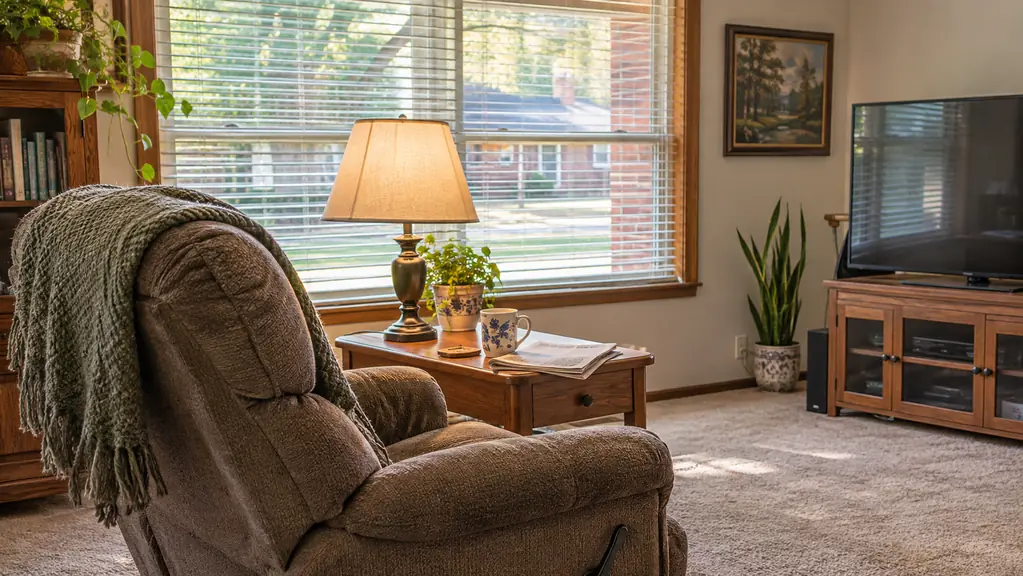
Last January I caught myself rocking three or four times to get up out of my old recliner, and my daughter Karen stood in the doorway and watched me do it. That was the moment I admitted the chair had stopped being furniture and started being a daily negotiation. What I did not know then is that buying a lift chair is nothing like buying a toaster. You cannot pick the one with the prettiest picture and hope. The chair has to fit the floor space by your window, it has to fit your own body, and somebody has to be able to carry 135 pounds through your front door. I bought an MCombo power lift recliner in February 2026, and before the truck arrived I made one good decision and came close to two bad ones. Here is what I would check, in the order I would check it, if I were starting over.
This is not a guide written by somebody who sells chairs. I am 72, I live in a one-story brick ranch in Gastonia, North Carolina, and I bought one chair, one time, with my own money. What follows is the checklist I wish somebody had handed me at Sunday lunch: five things to settle before you order, and the small extras that made the chair work in a real living room instead of a showroom floor. I am not a nurse and I am not a therapist and I will not pretend to be either. If you are recovering from a surgery or a fall, ask your doctor or a physical or occupational therapist about fit and safety before you spend a dime.
Five Checks, One Order, and Nine Months in the Same Chair
The MCombo 7040 in Medium is the chair I measured for, carried in with help, and have sat in every day since February 2026. Settle the five questions below first, then go look at it.
Amazon Check Today's Price on Amazon →Five Things to Settle Before You Order
Step 1: Measure the Floor, the Wall Behind It, and the Path to It
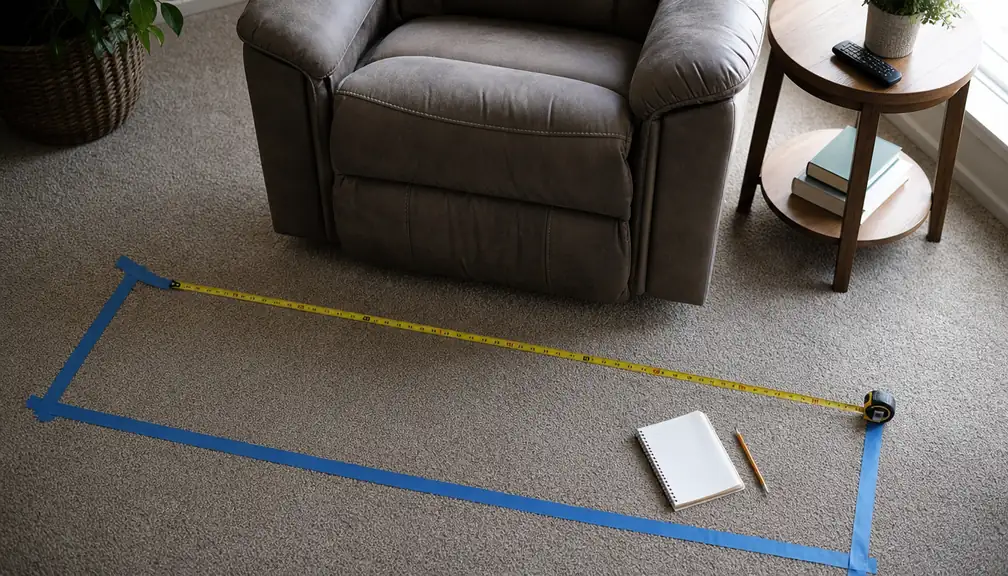
The MCombo 7040 in Medium is 34.6 inches wide, 37 inches deep and 42.5 inches tall, and it weighs 135 pounds. Those numbers meant nothing to me on a screen. They meant a great deal when I put painter's tape on the carpet in the shape of the chair's footprint and looked at it for a day. My chair corner is by the front window, and the tape showed me there was more room than I thought, but only if I moved the side table four inches toward the TV.
Depth matters as much as width, because the footrest swings out in front of the chair when you recline. Leave room in front, not just on the sides. Then walk the path you will actually use: from the front door, around the coffee table, past the hall closet. Measure the narrowest doorway on that path. A 34.6 inch chair will not go through a 30 inch opening, and 135 pounds is not something you and a neighbor tip sideways on a Tuesday afternoon.
The listing recommends carpet, and my living room is carpeted, which is one reason I stopped worrying about the chair sliding. If your chair corner is hardwood or vinyl, think about what sits under the legs before the chair arrives, not after. I also measured the wall behind the chair. The backrest needs a little breathing room and the chair leans back, so do not push it flat against a baseboard and expect it to feel right.
Step 2: Fit the Chair to Your Body, Not Just to the Room
MCombo makes this chair in more than one size, and the size you pick matters more than any feature on the box. I am 5 feet 4 inches and about 165 pounds, and I chose Medium. I nearly ordered larger, because I had it in my head that more chair had to be more comfortable. Then I sat in a chair at a furniture store that was too deep for me, my feet did not touch the floor, and I understood the problem in about four seconds.
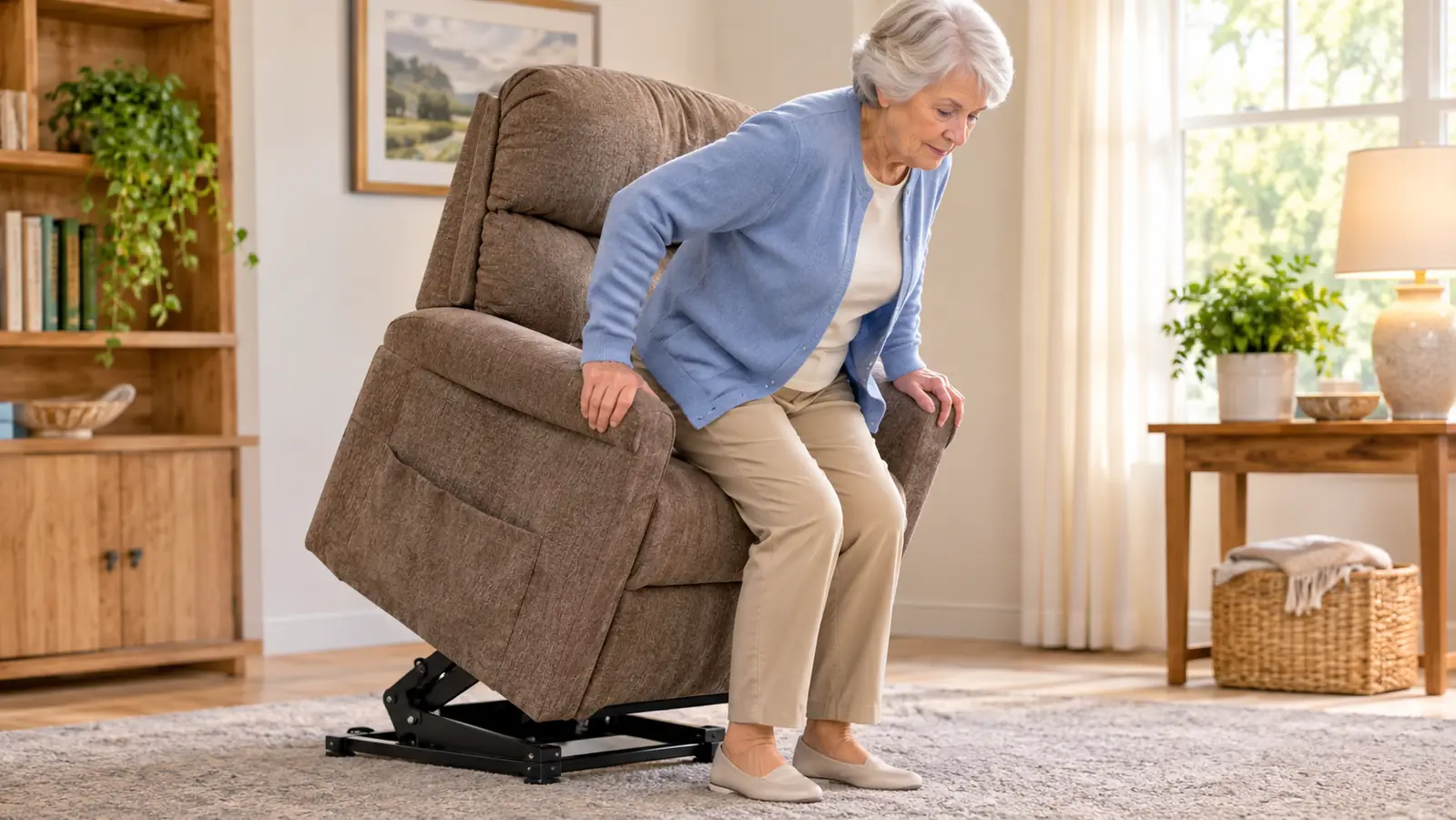
Here is the test I used, and it is the one I would pass along to anybody. Sit down. Put both feet flat on the floor. You should be able to slide a hand behind the back of your knee without the seat edge digging into it. When your back is against the backrest, your feet should still reach the floor. If they dangle, the seat is too high or too deep for you, and no amount of cushions fixes that for long.
I asked Dr. Patel about all of this before I ordered, and I would tell you to ask your own doctor or a physical or occupational therapist, especially after a surgery or a fall. They can tell you more about how you get in and out of a chair than any listing can. What I can tell you is that a chair that fits is a chair you stop thinking about. Nine months in, I sit in it for the newspaper at seven in the morning and for the ten o'clock news at night, and I do not think about the size anymore.
Step 3: Understand What the Lift Does Before You Trust It
The MCombo has a counter-balanced lift mechanism with a TUV certified actuator, and what that means in a living room is simple. You use the control, the whole chair rises and tips forward, and you are on your feet with less pushing than before. It is not a hoist and it is not a medical device. I want to be plain about that, because I have seen listings get loose with the language. The chair does not treat anything. It did not cure my stiff knees. It moves you from sitting to standing with less work from your own arms and legs.
The first week, I treated it like a new step on a staircase. I held both armrests, I let it rise all the way, I waited for it to stop, and then I stepped down onto the carpet. That is still what I do. The motor hums while it moves, which startled me once and then stopped being interesting. If you are unsteady on your feet, have somebody stand beside you the first several times, and ask your therapist whether the way you are doing it is safe for you.
One more thing about the lift. It does not stand you up and walk you to the kitchen. It gets you to your feet. What you do after that is your own business, and for me it is a short walk to the coffeemaker, which is the whole point of getting up.
Step 4: Decide Which Extras You Will Actually Use
This chair has heat and vibration, and the listing spells out the details: 8 vibration nodes, 5 massage modes and 2 intensity levels. I use the heat on cold mornings, mostly across my lower back, and it is the feature I would pay for again. The vibration I use now and then. I will tell you what it is, honestly. It is a gentle buzz that feels nice after a long afternoon, not a real massage, and anybody who tells you otherwise has not sat in one for an hour.
The armrests have cup holders built into them. I used mine for coffee for about a month, until I set a mug down on a Saturday and forgot it, and then I covered the chair with a slipcover and the cup holders went under the arm pieces. That is not a complaint. It is just the truth about how a feature you thought you wanted gets used in a real house. The surface wipes clean with a damp cloth, and that matters more to me than any of the extras.
There is a 2-year warranty on the chair and I have not needed it. What I would say is this. Read what the extras actually are, in the plain words on the listing, and then ask yourself how many Tuesday mornings you will really use them. Heat, yes, in my case. Five massage modes, not so much. Cup holders, for a month.
Step 5: Plan the Delivery, the Assembly, and the Outlet
The chair arrived in two boxes, and the whole thing weighs 135 pounds. I want you to read that sentence twice. Do not meet the delivery truck alone and do not decide you will drag it in yourself. My husband Walt and my daughter Karen carried it in and had it together in about half an hour. The backrest slides onto the base, the arms attach, and the parts box and the manual come in with it. Nothing was missing and nothing was broken.
Before that day, look at the outlet. The chair plugs into a wall outlet, so the outlet needs to be within reach of the chair and not behind a bookcase you cannot move. Mine is by the window, and the cord runs along the baseboard where nobody walks. The hand control has a cord of its own, and that cord annoyed me for the first two months until I started keeping the control in the pocket on the side of the chair instead of on my lap.
Put the manual somewhere you will find it again. Mine is in the drawer of the side table with the warranty card, and I have not opened either one since February. Wipe the chair down with a damp cloth now and then, and keep the floor in front of the footrest clear, because that is where your feet land when the chair is up.
What Else Helps
The chair was the big decision, and the small things around it did more for my days than I expected. None of them are required. All of them are cheap compared with getting the chair wrong in the first place.
Three weeks after the chair arrived I set a mug down badly and coffee ran down the arm. It came out with a damp cloth and never stained, but it scared me into buying a stretch slipcover. Karen and I fit it in about twenty minutes, four pieces, and it has been on the chair ever since. It is snug on the seat and back and a little loose on the footrest, and I keep it well clear of the lift mechanism. I check that the chair still rises and reclines freely with it on, every time I wash it.
A caddy that hangs over the right armrest holds my TV remote, my reading glasses, a pen and my phone, and it ended the business of fishing around the side of the chair for the remote. The chair's own hand control stays in the chair pocket, not in the caddy, so I am never hunting for it. A lap desk rests on my knees for the tablet and the crossword book, and I set it on the floor before I stand up, every single time. A small lumbar pillow sits in the small of my back when I am sitting upright to read, because the backrest leaves a gap there for me, and I take it out before I recline.
The best thing I did cost nothing at all. I cleared the path from the chair to the hallway, put a lamp within arm's reach, and started carrying my phone in my cardigan pocket instead of leaving it on the table across the room.
I put painter's tape on the carpet in the shape of the chair, measured the doorway twice, and ordered the Medium because I am 5 feet 4 inches. It fit on the first try, and that is the whole trick.
Measured Twice, Sat in It Every Day Since February
The MCombo 7040 in Medium is the chair that fit my corner, my height and my morning knees. Check the size chart against your own measurements before you order, and have somebody lined up to help carry the boxes in.
Amazon Check Today's Price on Amazon →